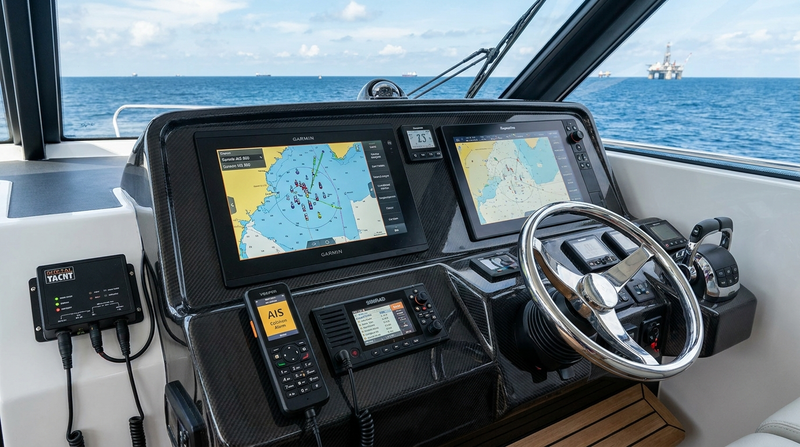
Two hours out of Montauk, running southwest in a 2-foot chop with a 20-knot breeze on the beam, hand-steering gets old fast. Your arms tire, your course wanders, and fuel economy tanks because you're overcorrecting constantly. Engage the autopilot and you get something remarkable: the boat holds a tighter course than most humans can manage manually, the engine runs at a steadier load, and you're free to check the radar, grab a sandwich, or actually fish.
Most boaters know autopilots exist. Fewer actually understand how they work — and that matters, because if you understand the mechanics, you'll spec the right system for your boat the first time, you'll tune it correctly, and you'll know when something's about to fail before it does offshore.
Here's how marine autopilot systems actually work, what the major components do, and what you should prioritize when you're shopping.
The Four Core Components of a Marine Autopilot
Every marine autopilot — whether it's a $600 tiller pilot on a 22-foot sailboat or a $12,000 hydraulic system on a 45-foot sportfish — runs on the same four-part architecture.
1. The Heading Sensor (Compass)
The autopilot needs to know which direction the boat is pointing at all times. The compass provides this reference. Most modern systems use either a fluxgate compass (which senses the earth's magnetic field), a solid-state rate compass (which detects angular rate of rotation using gyroscopic technology), or a combination of both. Raymarine's Evolution series and Garmin's Reactor 40 both use proprietary solid-state sensors that blend rate compass data with GPS heading. This matters more than most buyers realize — we'll come back to it.
2. The Course Computer
The brain. It receives heading data from the compass, compares the actual heading to the target heading, calculates how far off course the boat is (the error), and decides what correction to apply. Modern course computers use PID (proportional-integral-derivative) control algorithms, which sounds complicated but basically means the computer considers not just how far off course you are, but how fast you're moving away from the correct heading and how long you've been off course. This is why a well-tuned autopilot can anticipate a wave rather than just reacting to it after the bow has already swung 8 degrees.
3. The Drive Unit
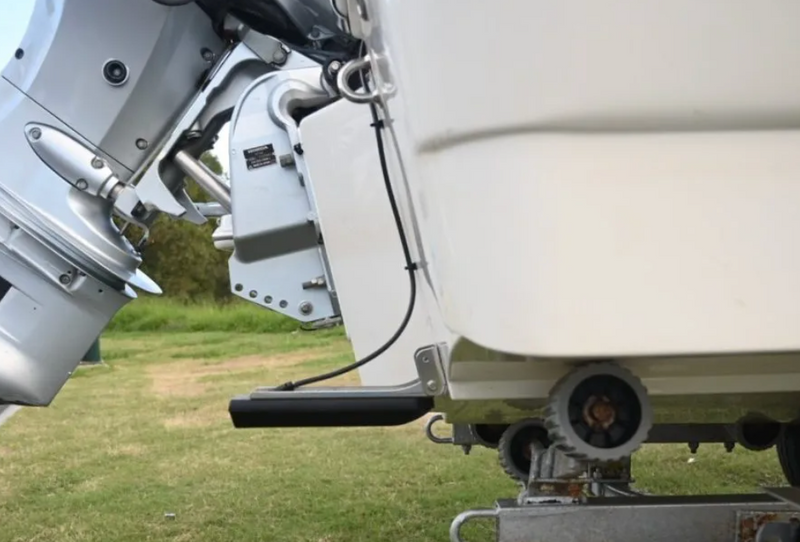
This is what actually moves the rudder, wheel, or outboard tiller. Drive units come in three main types:
- Rotary (wheel) drives: A belt or gear system attaches to the steering wheel and turns it directly. Common on smaller powerboats and auxiliary sailboats.
- Linear (push-pull) drives: A ram extends and retracts to push the tiller or connect to a mechanical steering system. Used on tiller-steered boats and some center consoles.
- Hydraulic drives: A dedicated hydraulic pump replaces or augments the existing hydraulic steering circuit. This is what serious offshore boats use. The Garmin Reactor 40 Hydraulic, Simrad AP70 MK2, and Raymarine EV-200 all run hydraulic drive configurations.
The drive unit is where most autopilot failures we've seen actually originate — not the computer, not the compass. Worn hydraulic seals, a rudder feedback unit that's corroded at the connector, a drive unit that was undersized for the boat's rudder torque.
4. The Rudder Feedback Unit (RFU)
A potentiometer or sensor that tells the course computer exactly where the rudder is at any given moment. Without feedback, the computer is flying blind — it knows the correction it commanded, but not whether the drive unit actually delivered it. The feedback unit closes the loop. On hydraulic systems, this is usually mounted to the rudder stock or the steering cylinder. It's a simple component, but when it corrodes or the wiring degrades, the autopilot starts hunting (oscillating back and forth) or refuses to engage entirely. Keep the connector protected with dielectric grease.
How the Steering Loop Actually Works
Here's the sequence that happens dozens of times per second when your autopilot is active:
- You set a target heading — say, 245°M.
- The compass reports the actual heading — say, 248°M.
- The course computer calculates the error: you're 3° to starboard of your target.
- The PID algorithm calculates the required correction — a port rudder command.
- The drive unit applies that rudder correction.
- The RFU reports rudder position back to the computer: "Rudder now 4° to port."
- The compass updates: you're now at 246°M.
- The error shrinks. The computer eases the correction.
- Repeat, forever.
The tuning of this loop is what separates a well-installed autopilot from one that hunts constantly and drains your batteries. The key variables are rudder gain (how aggressively the system corrects), counter-rudder (how quickly it eases off once it's corrected), and sea state adjustment (how much the system filters out small wave-induced deviations rather than chasing every one of them).
Raymarine's Evolution autopilots run a self-learning algorithm that tunes these parameters automatically. Garmin's Reactor 40 does something similar. Simrad's AP70 MK2 gives you more manual control — which experienced operators appreciate but first-time users often over-tune and then blame the autopilot for hunting.
Fluxgate vs. Rate Compass: The Most Important Spec Nobody Talks About
Traditional fluxgate compasses work, but they have a real weakness: they respond to physical heading changes, not angular rate. On a boat that's rolling and pitching in chop, a fluxgate can have trouble distinguishing "the bow is swinging off course" from "the whole boat is heeling to starboard." It can give false heading errors that cause the autopilot to chase phantom course deviations.
Rate compasses add a gyroscopic reference. They measure how fast the heading is changing, not just where it is. This makes them much more stable in rough water. A rate compass on a 28-foot center console in 3-foot chop will hold course significantly better than a fluxgate-only system, all else being equal.
The Garmin Reactor 40 uses a solid-state rate compass integrated into the course computer. The Raymarine Evolution series (EV-100 through EV-200) uses Raymarine's proprietary SeaTalk ng rate compass. Simrad's AP70 MK2 pairs with the Simrad RI-35 MKII rate compass.
If you're comparing autopilot systems and one uses a rate compass and one uses a traditional fluxgate at a similar price point, the rate compass system is almost always worth the premium.
NMEA 2000 Integration: What It Actually Unlocks
A stand-alone autopilot that just holds a magnetic heading is useful. An autopilot that's talking to your chartplotter, GPS, and wind instruments is genuinely transformative.
Via NMEA 2000, a modern autopilot can:
- Follow a GPS track — you set a route on your chartplotter, hit Navigate, and the autopilot follows each waypoint automatically. This is track mode, and it's one of the most useful features on any offshore boat.
- Use GPS heading instead of compass heading — GPS SOG and COG are unaffected by magnetic deviation. On steel or aluminum boats, this can be a significant accuracy improvement.
- Respond to wind angle — on sailboats, the autopilot maintains a constant angle to the apparent wind rather than a fixed heading, adjusting automatically when the wind shifts.
- Interface with AIS data — some systems can prompt the helm when a course change is needed to avoid a collision flagged by AIS.
The Garmin Reactor 40 Hydraulic integrates fully with the GPSMAP 9000 series and any Garmin chartplotter. The Simrad AP70 MK2 works with Simrad NSS evo3S and the Simrad GO series. Raymarine's Evolution autopilots connect via SeaTalk ng and NMEA 2000 to Axiom displays.
Don't spec an autopilot in isolation. The one that integrates best with your existing electronics stack is the one you'll get the most from.

Matching the System to the Boat
Outboard-powered center consoles (under 30 feet): A wheel drive or dedicated outboard autopilot. The Garmin Reactor 40 Steer-by-Wire works with Yamaha Helm Master and Mercury Joystick Piloting. For conventional hydraulic outboard steering, the Reactor 40 Hydraulic or the Raymarine EV-150 are solid choices.
Inboard/sterndrive powerboats: Hydraulic drive autopilots are typical. The AP70 MK2 is the choice for serious offshore inboard boats — commercial-grade processor, high-duty-cycle pump, built for long passages.
Sailboats under 40 feet: The Raymarine EV-100 Wheel or Tiller packs are the go-to entry point. We've installed dozens of these. They work well in moderate conditions and the SeaTalk ng integration with Axiom plotters is clean. If you're doing offshore passages, step up to the EV-200 for more drive power.
Sailing vessels over 40 feet: Hydraulic drive, either the Raymarine EV-200 or a B&G autopilot with dedicated hydraulic drive. B&G's autopilots talk to B&G instruments and wind sensors natively, which matters when you're sailing by apparent wind.
Buying Checklist: What to Actually Look For
Drive power (Newton-meters of torque or pump output in GPM): This has to match your boat's steering load. Undersizing the drive is the single most common installation mistake. Ask us — we'll calculate it based on your boat's displacement and rudder size.
Rate compass vs. fluxgate: Rate compass wins. Pay for it if you can.
Track mode: Can the autopilot follow a GPS route? If you ever run overnight, the answer needs to be yes.
Duty cycle: How long can the drive unit run continuously? On a calm bay, it barely matters. On a 30-hour offshore passage in 4-foot seas, a low-duty-cycle pump will overheat.
Integration with your chartplotter brand: Cross-brand NMEA 2000 works for the basics, but proprietary network features require matching brands.
Self-calibration: Raymarine EV-series and Garmin Reactor 40 both self-calibrate compass deviation during a calibration run. Simrad AP70 has a manual calibration process.
Autopilot System Comparison
| Feature | Garmin Reactor 40 | Raymarine EV-200 | Simrad AP70 MK2 |
|---|---|---|---|
| Drive type | Hydraulic or wheel | Hydraulic or wheel | Hydraulic |
| Compass | Solid-state rate | SeaTalk ng rate | RI-35 MKII rate |
| Track mode | ✅ Yes | ✅ Yes | ✅ Yes |
| NMEA 2000 | ✅ Yes | ✅ Yes | ✅ Yes |
| Self-calibration | ✅ Yes | ✅ Yes | Manual |
| Approx. retail (full system) | $2,800–$4,200 | $2,200–$3,800 | $4,500–$6,500 |
| Best for | Power + sail, offshore | Sail, cruising powerboats | Commercial, long-distance |
 The Bottom Line
Marine autopilots aren't complicated once you understand the loop: the compass tells the computer where you are, the computer tells the drive unit what to do, the feedback unit confirms what happened, and the loop repeats. The difference between a $700 system and a $5,000 system is almost entirely in how accurately each component does its part.
For most powerboats under 35 feet doing coastal cruising, the Garmin Reactor 40 hits a sweet spot of performance, integration, and price. For sailboats under 40 feet, the Raymarine EV-200 is hard to beat. For offshore passage making, the Simrad AP70 MK2 is built for it.
Whatever system you choose, size it correctly for your boat's steering load, pair it with a rate compass, and protect the rudder feedback unit from corrosion. Those three things will keep the system running reliably for years.
👉 Shop All Marine Autopilot Systems at NVN Marine →
Frequently Asked Questions
What is the basic principle behind how a marine autopilot works?
A marine autopilot uses a heading sensor (compass) to continuously measure the boat's actual heading, compares it to the target heading set by the operator, and uses an electric or hydraulic drive unit to correct any deviation. This correction loop runs dozens of times per second, keeping the boat on course far more precisely than manual steering in most conditions.
What's the difference between a rate compass and a fluxgate compass in an autopilot?
A fluxgate compass measures the absolute direction of the earth's magnetic field — it tells the autopilot where the bow is pointing. A rate compass adds gyroscopic sensing that measures how fast the heading is changing. In rough water, the rate compass gives the autopilot better data because it can distinguish between a wave-induced roll and an actual course change. Most high-quality autopilots like the Garmin Reactor 40 and Raymarine EV-200 use rate compasses for this reason.
Can a marine autopilot follow a GPS route automatically?
Yes — this is called track mode. When the autopilot is connected to a chartplotter via NMEA 2000, it can receive waypoint data and steer the boat along a planned route, automatically turning at each waypoint. Track mode is one of the most valuable features for offshore boating and overnight passages.
What is a rudder feedback unit and why does it matter?
The rudder feedback unit (RFU) is a sensor mounted to the rudder or steering cylinder that tells the autopilot's course computer exactly where the rudder is at any moment. Without it, the autopilot commands a correction but cannot confirm it was delivered. A failed or corroded RFU is one of the most common causes of autopilot hunting (oscillating back and forth) or failure to engage.
How do I know if an autopilot drive unit is powerful enough for my boat?
Drive unit sizing is based on your boat's displacement, rudder size, and the loads your steering system generates. As a general rule, for every 5,000 lbs of displacement, you need roughly 50–60 Newton-meters of drive torque for a powerboat in moderate conditions. Hydraulic drive systems are rated in pump output (gallons per minute). If you're unsure, contact NVN Marine with your boat specs — we'll match you to the correct system before you order.
Does a marine autopilot work in rough weather?
Yes, though performance varies by system quality and tuning. A well-tuned autopilot with a rate compass will hold course more accurately in rough conditions than most humans can manually. The key is adjusting the sea state setting to prevent the autopilot from overcorrecting for every wave. Higher-end systems like the Simrad AP70 MK2 handle heavy-weather performance better than entry-level units because of their higher-duty-cycle drive units and more sophisticated control algorithms.